
Mass, Force & Torque · 4 min read
Force Gauge and Load Cell Calibration
Force measurement underlies materials testing, product strength verification, and countless assembly checks. Calibrating a force gauge or load cell keeps those numbers honest in both directions of loading.
Part of our guide to Mass, Force & Torque Calibration.
Tension and compression
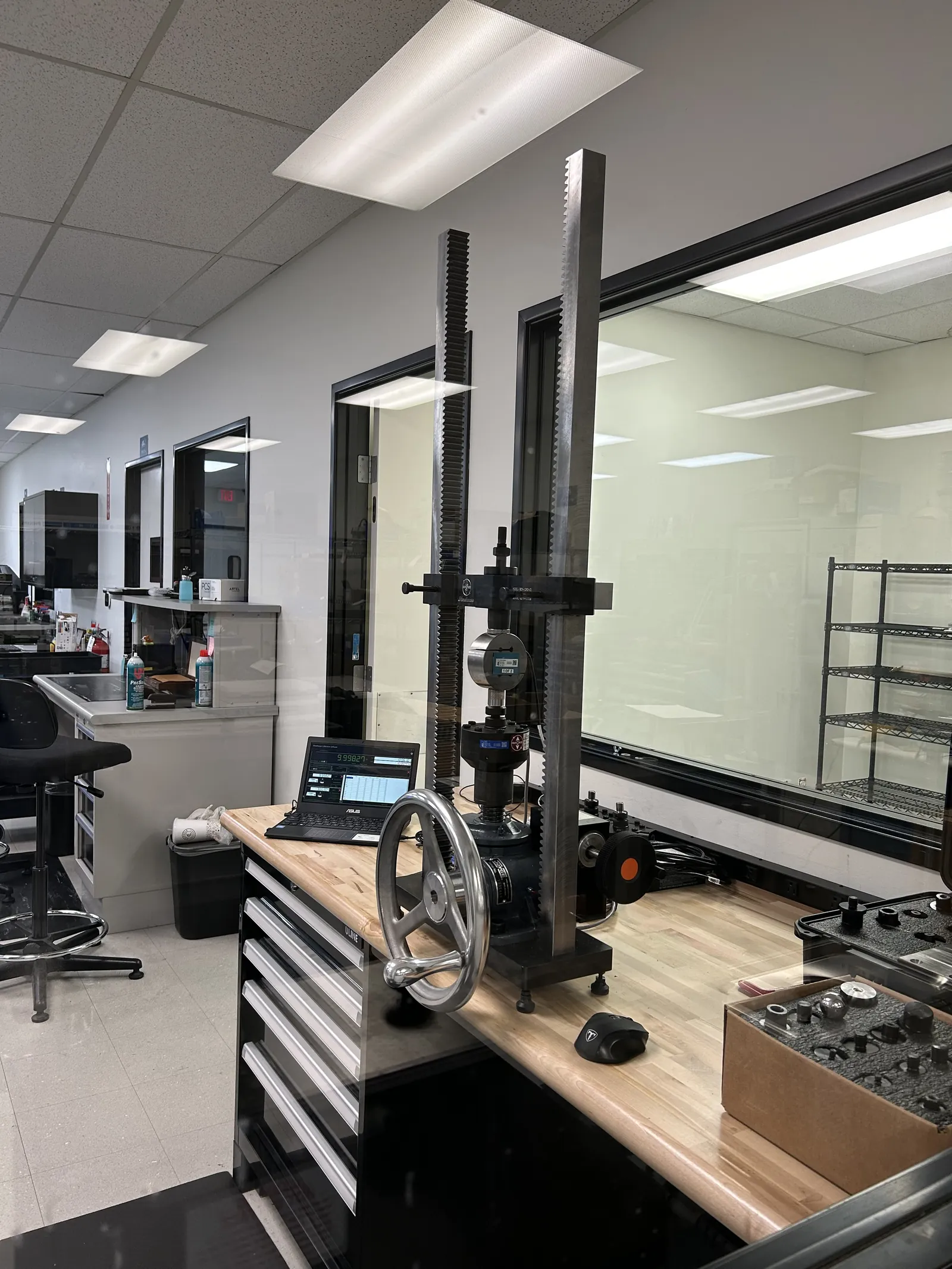
Force instruments are calibrated by applying known forces from a reference (a reference load cell system or deadweight machine) at multiple points across the range, in tension and/or compression as the instrument is used. Because a device can behave differently in each mode, calibrating in the direction(s) of actual use is important.
Systems and testing machines
Load cells built into tensile/compression testing machines are often verified in place, since the whole system’s response is what matters. The certificate reports data at each point with uncertainty and pass/fail against spec (commonly referencing standards like ASTM E74 for force-measuring instruments). This is what lets a materials-test result stand up to scrutiny.

Common questions
Can you calibrate a load cell inside our test machine?
Often yes — verifying the load-measuring system in place captures the real response. Send the machine and load cell details and we will confirm approach, scope, and whether on-site is appropriate.