
Electrical & RF · 4 min read
Frequency Counters and Time-Base Calibration
Frequency is the physical quantity we measure most precisely of all, which makes time-base calibration both powerful and unforgiving — small reference errors propagate straight into your results.
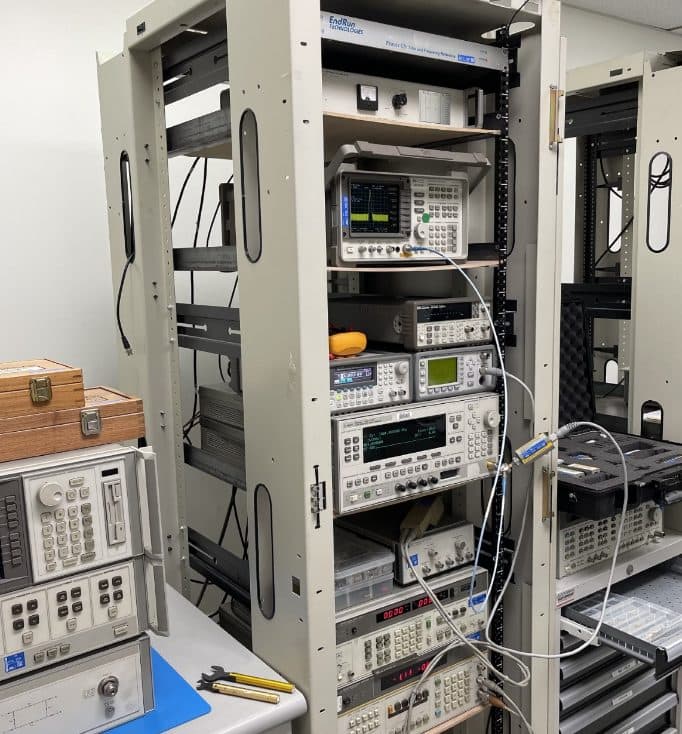
Part of our guide to Electrical, RF & Time/Frequency Calibration.
Referencing a stable source
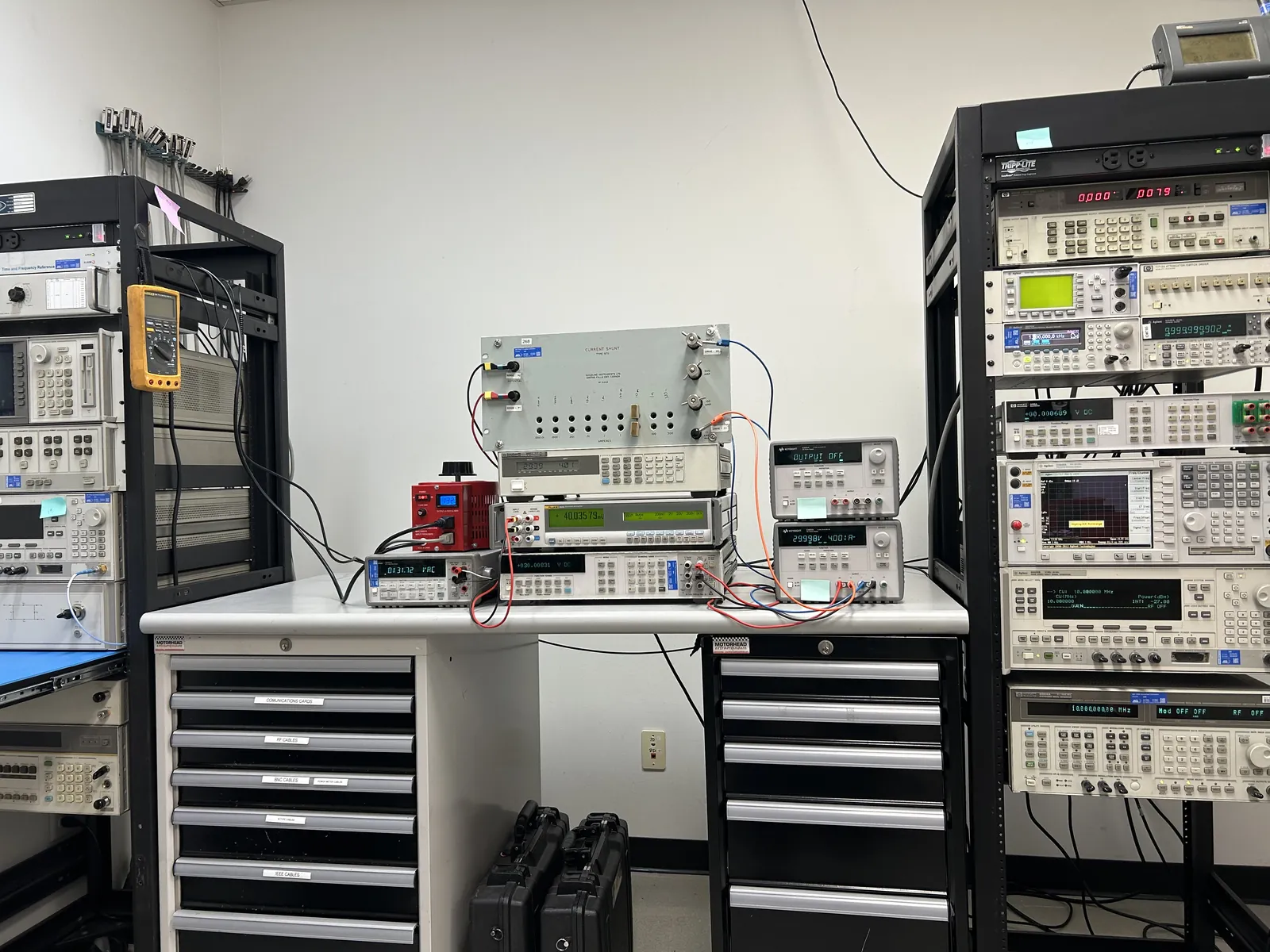
Frequency counters and instrument time bases (the internal oscillators in scopes, generators, and counters) are calibrated against a stable, traceable frequency reference — for example a high-stability oscillator disciplined to a national time/frequency standard. The measurement compares the instrument’s frequency against the reference and reports the deviation, often in parts-per-million or better.
Why it quietly matters
A drifting time base skews every timing and frequency measurement an instrument makes, usually without any obvious symptom. Periodic calibration against a traceable reference keeps that error known and bounded. Because the achievable uncertainties are so small, the reference’s stability and traceability are the whole story here.
Common questions
How accurate is frequency calibration?
Time and frequency support extremely small uncertainties relative to other quantities, limited mainly by the reference’s stability and traceability. Your certificate will state the achieved uncertainty for your instrument.