
Electrical & RF · 4 min read
Digital Multimeter (DMM) Calibration
The digital multimeter is the most common electrical instrument in any facility, and its calibration is only as good as the range of functions and points it actually covers.
Part of our guide to Electrical, RF & Time/Frequency Calibration.
What gets calibrated
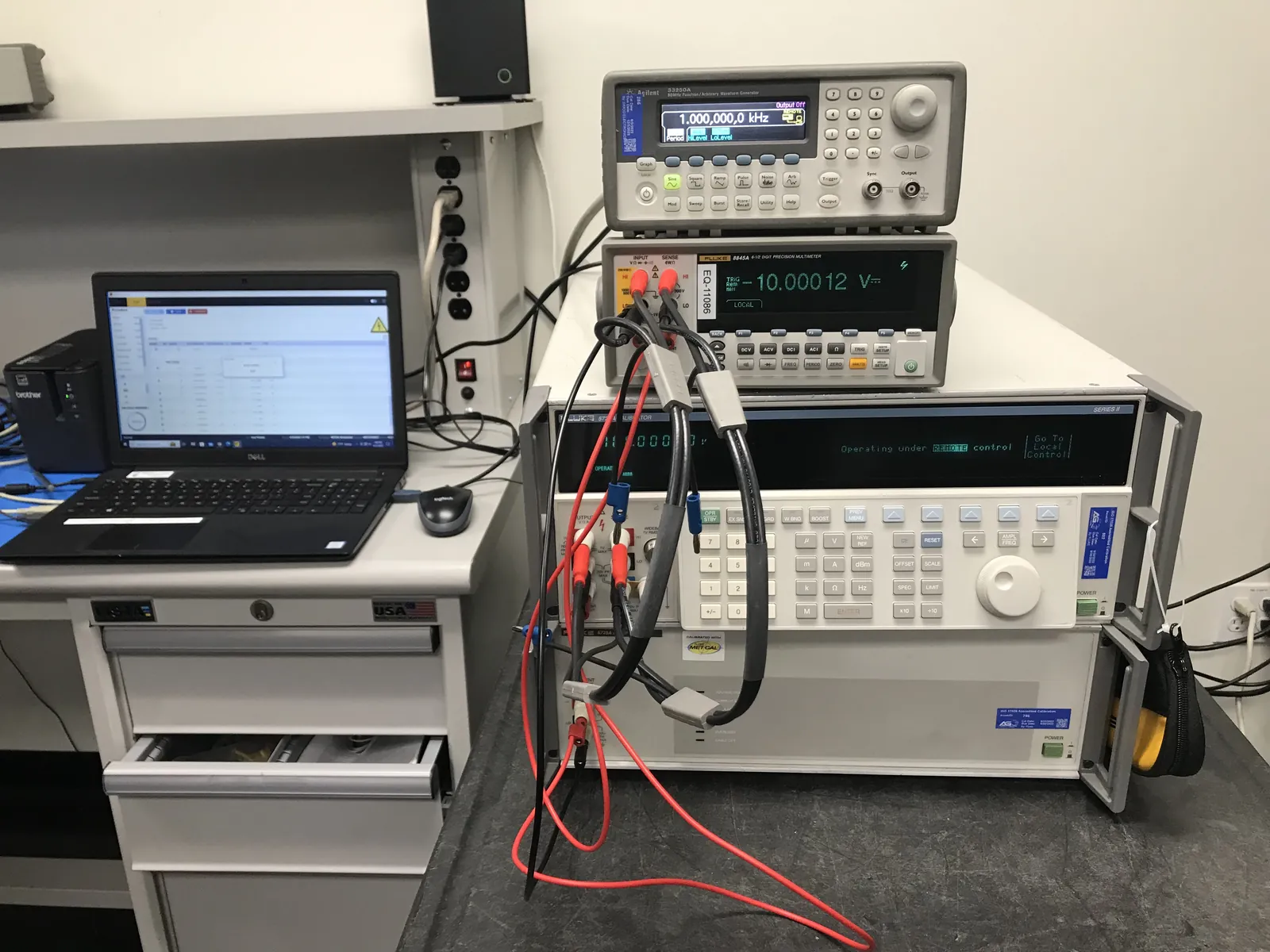
A DMM calibration exercises the functions you use — DC voltage, AC voltage, DC/AC current, and resistance — at multiple points across each range, driven by a multifunction calibrator traceable to national standards. Higher-resolution bench DMMs demand a more capable standard to preserve an adequate test uncertainty ratio.
What the certificate should show
Expect as-found/as-left readings at each point and range, measurement uncertainty, and pass/fail against the manufacturer specification or your stated tolerance. A certificate covering only DC volts when you use current and resistance is not calibrating the instrument you actually use.
Common questions
Should every function be calibrated?
Calibrate the functions and ranges you use to verify product. Explicitly excluding unused functions is fine if documented — but do not assume a DC-only certificate covers your AC or resistance measurements.