
Mass, Force & Torque · 4 min read
Torque Wrench Calibration: A Practical Guide
A torque wrench sets the clamp load on fasteners that hold together engines, airframes, and machinery. Calibration is the difference between a joint that holds and one that fails.
Part of our guide to Mass, Force & Torque Calibration.
How it is calibrated
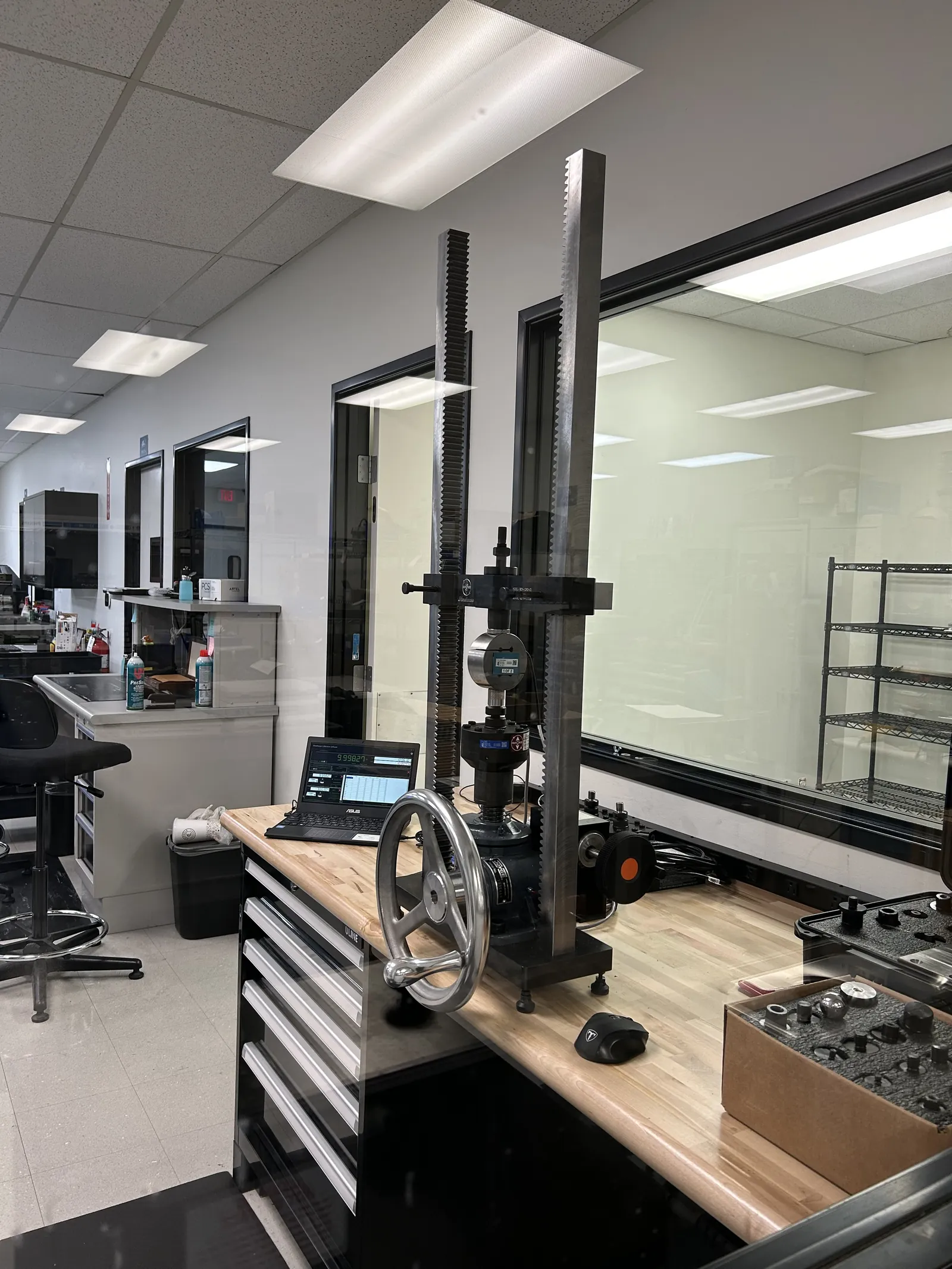
Torque wrenches are calibrated against a reference torque transducer or calibrated loading system at multiple points across their working range (commonly around 20%, 60%, and 100% of full scale), in the direction(s) of use. Click, dial, and electronic wrenches each have specifics, but all are verified for accuracy across the span rather than at a single setting.
What to watch for
Click-type wrenches should be stored at their lowest setting and can drift with heavy use, so interval and handling matter. The certificate should report as-found/as-left readings at each point with uncertainty and pass/fail against the applicable tolerance (often per ASME B107 / ISO 6789 for hand torque tools). For safety-critical fastening, that documented data is exactly what your quality system needs.

Common questions
How often should a torque wrench be calibrated?
Commonly annually or every ~5,000 cycles, whichever comes first, and sooner for heavy or safety-critical use. Base it on usage and your quality requirements, and document the rationale.