
Pressure, Temp & Environmental · 8 min read
Pressure, Temperature & Environmental Calibration
Pressure, temperature, and humidity are the physical parameters behind an enormous amount of process control and product testing. This hub covers how each is calibrated — from a simple pressure gauge to mapping a walk-in environmental chamber.
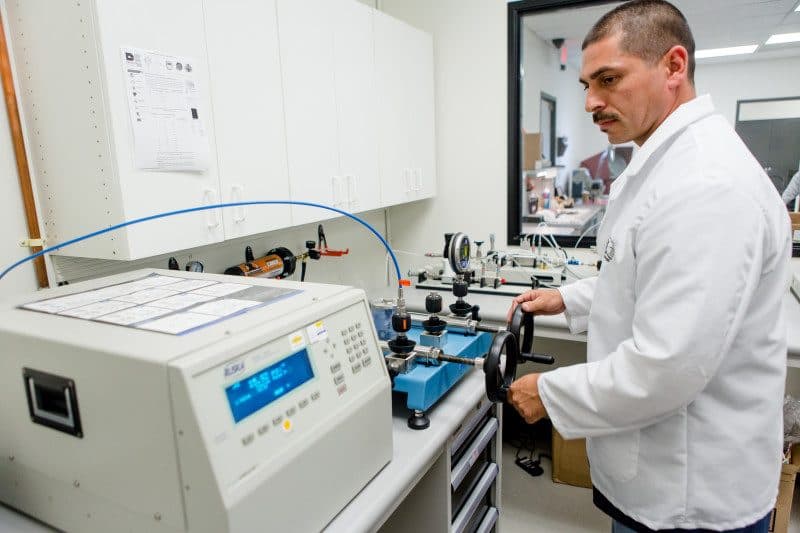
Three parameters, one principle
Whether it is pressure, temperature, or humidity, the principle is the same: compare the instrument to a traceable reference and document the difference with uncertainty. What changes is the physics — pressure references (deadweight testers, precision controllers), temperature references (fixed points, precision baths, reference thermometers), and humidity references (two-pressure/two-temperature generators) each demand their own standards and technique.
Where control meets measurement
These parameters are unusual in that the lab often has to generate a stable, known condition and measure it at the same time — a controlled pressure, a uniform bath temperature, a fixed humidity. That is why capability here is as much about the environment and the reference system as the readout. American Gage runs dedicated pressure, temperature/humidity work with traceable standards and documents data and uncertainty on every certificate.
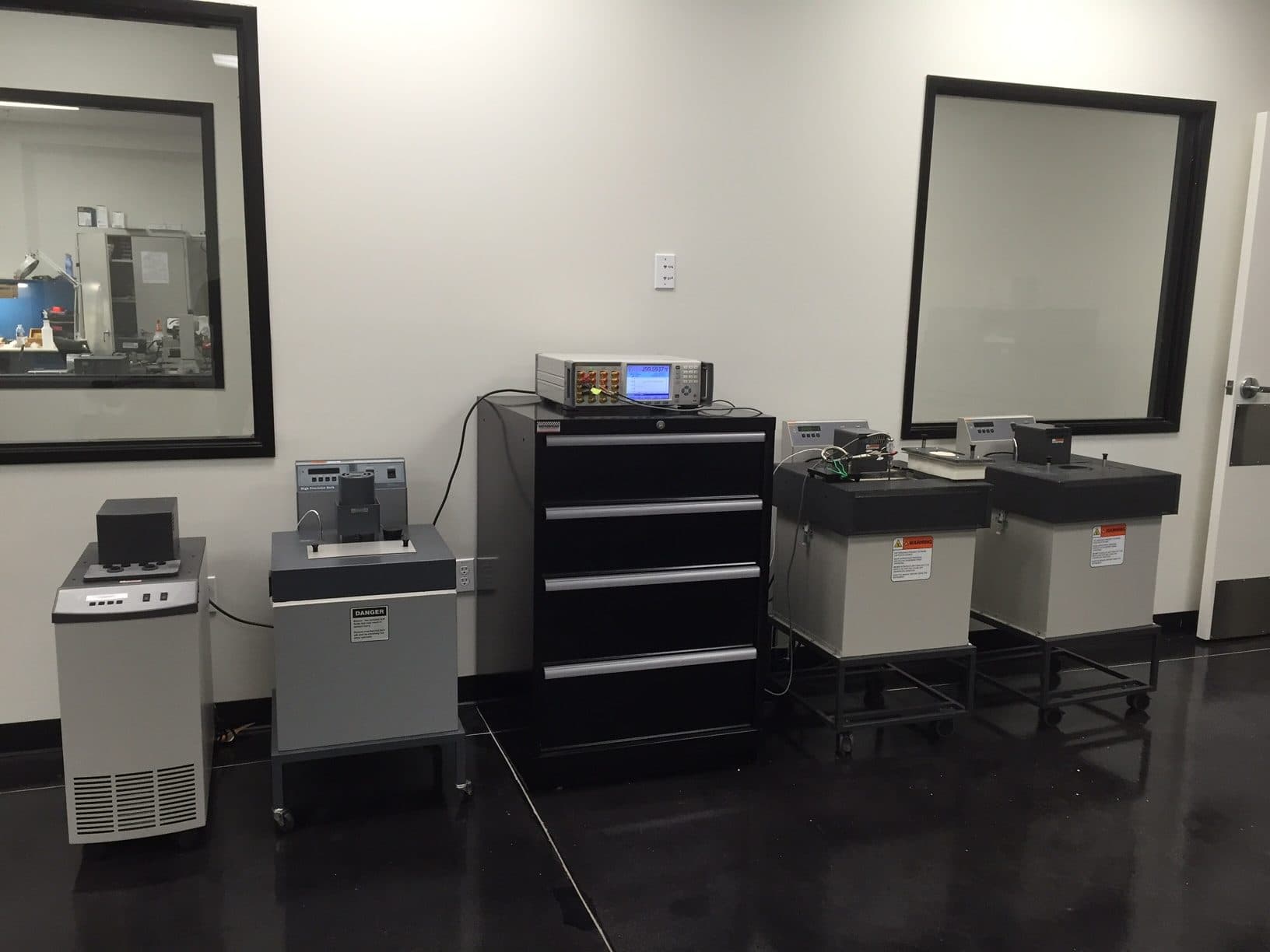
The instruments, one by one
The articles below cover pressure gauges and transducers, temperature sensors (RTDs and thermocouples), humidity, environmental chamber mapping, data loggers, and deadweight testers.
In this guide
Common questions
Can you calibrate environmental chambers on-site?
Chamber mapping is frequently done on-site because moving a chamber is impractical. Sensors and reference instruments require traceable calibration — contact us to discuss mapping and on-site options.