Service Area · City
Calibration Services in Culver City
Culver City runs on engineering that rarely gets called engineering. Studio and post-production facilities maintain electrical benches, rigging and motion systems, and fabrication shops. The tech companies that filled the Hayden Tract and the Ivy Station corridor build hardware. And the city carries an aerospace memory too — Hughes Aircraft was headquartered here for decades before the campus became studio space.
Distance
≈38 miles from our Placentia lab
Drive time
50–70 minutes
Route days
Tuesday & Thursday — free pickup & delivery
Rigging and motion equipment carries real consequence
Production facilities run load-bearing systems — rigging, motion control, camera cranes, automated effects — where a wrong reading is not a quality problem but a safety one. The load cells, dynamometers, and force gauges verifying those systems are measurement instruments in the full sense, and they belong on a documented recall schedule.
We calibrate force by dead weight and torque from 0.5 ozf·in to 1,000 lbf·ft, covering torque wrenches and torque tools used across rigging hardware and equipment assembly. Certificates carry as-found and as-left readings, which is the part that matters if a device is ever found reading high — you need the historical record to establish what it was doing before, not just what it does now.
Electrical benches, and why automation matters
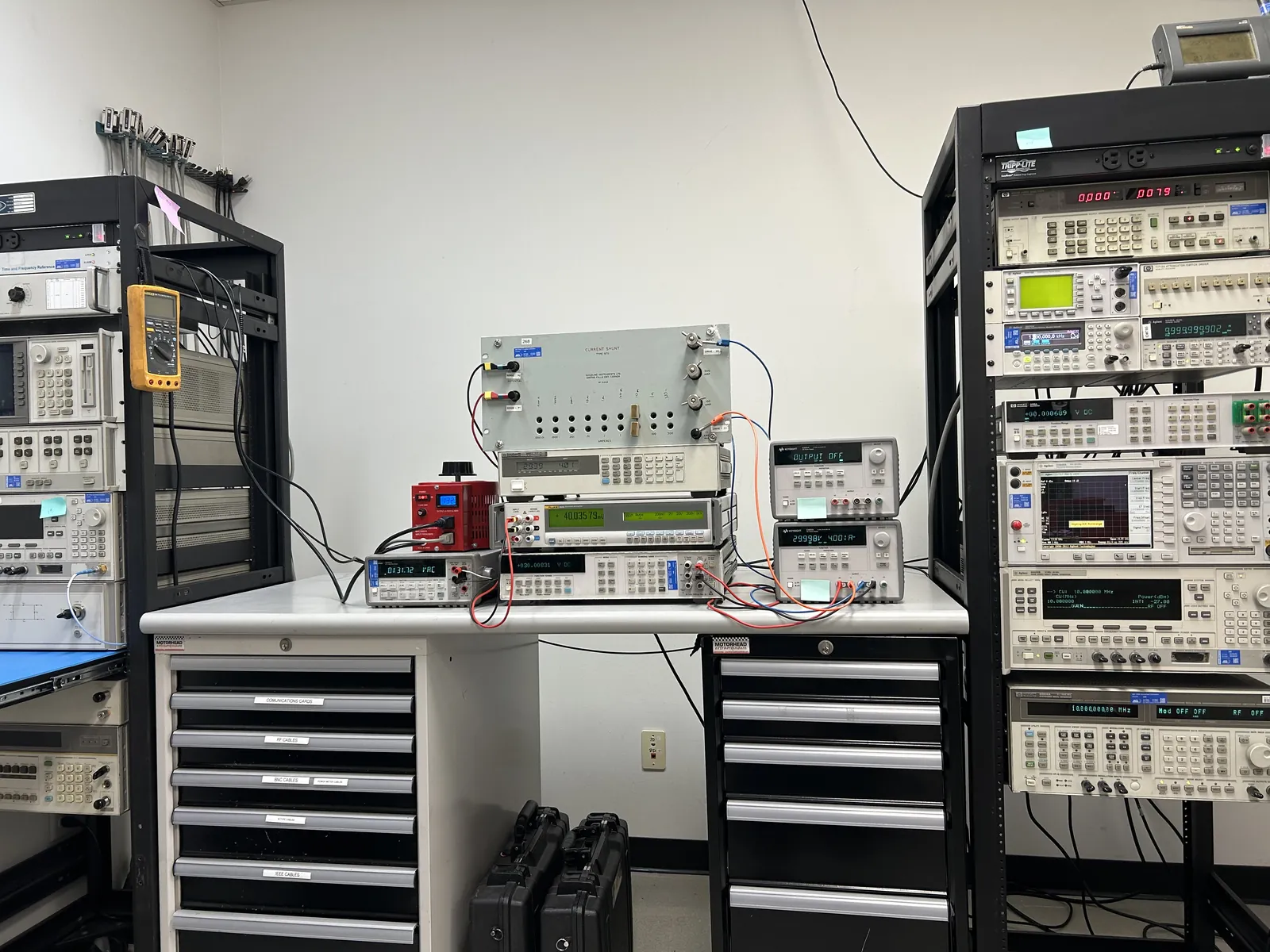
Broadcast, post, and hardware engineering all keep electrical test equipment, and volume varies wildly — a single multimeter on a maintenance cart, or a full rack of sources and analyzers in a lab.
Both go through the same automated Fluke MET/CAL procedures in our electrical and RF laboratory. Automation is not primarily about speed; it is about repeatability and a data record that does not vary with which technician was at the bench. Coverage runs from digital multimeters to 8.5 digits through oscilloscopes, power supplies and loads, function and signal generators, power meters, and spectrum and network analyzers.
Hardware startups discover calibration late
The tech companies around the Hayden Tract that build physical products tend to meet calibration requirements the way most young hardware companies do — during a customer qualification or a first regulatory conversation, at which point the instruments used to generate design verification data have no traceability behind them.
That is a solvable problem, but only forward. Instruments can be calibrated today and their as-found condition recorded; what cannot be reconstructed is the traceability of data taken last year on an uncontrolled instrument. If a Culver City hardware team is approaching design freeze, getting the bench under control before verification testing is considerably cheaper than explaining its absence afterward. Our guide on how often instruments should be calibrated is a reasonable starting point.
Fabrication shops and the dimensional side
Set construction, prop fabrication, and prototype shops run the same dimensional inventory as any machine shop, if usually smaller: calipers, micrometers, squares, height gauges, and indicators. Dimensional has been our largest-volume discipline since 1968 and it does not much matter to us whether the part being measured ends up on an aircraft or on a soundstage.
We also repair dimensional instruments with parts stocked for Mitutoyo, Starrett, Interapid, and SPI, with estimates capped at 50% of the cost of new, and lap small granite surface plates to ±0.0001 in.
Thirty-eight miles, handled by the route
Culver City is on our free Tuesday and Thursday Los Angeles County route. The drive is real — 50 to 70 minutes depending on the 405 — but it costs you nothing, and instruments stay in our custody from your dock to our bench and back.
That custody is the difference worth paying attention to. The common Southern California alternative is a national chain office that collects work and forwards it out of state into a queue you cannot see. Everything we calibrate is calibrated at 1131 S Richfield Rd in Placentia, under A2LA ISO/IEC 17025:2017 accreditation certificate 4296.01, with a 7–10 business day standard turnaround and expedited 24, 48, and 72-hour service when a production date will not move.
It is also worth knowing what does not need calibrating. Plenty of equipment in a production or engineering environment is indicating rather than measuring — a gauge nobody makes a decision from, a readout used for rough setup, a meter that only confirms something is on. Putting those on an accredited schedule wastes money and clutters the recall calendar until the items that matter get lost among them. Send us the full list and we will tell you honestly which instruments belong on a schedule, which need traceable rather than accredited service, and which can be left alone. That conversation costs nothing and it usually shrinks the program rather than growing it, which is not the answer a national chain has much incentive to give.
Industries we serve in Culver City
- Media & Production Engineering
- Technology & Hardware
- Aerospace & Defense
- Prototype & Fabrication Shops
- Corporate R&D Labs
The Lab Behind the Routes
Where Culver City instruments actually get calibrated.
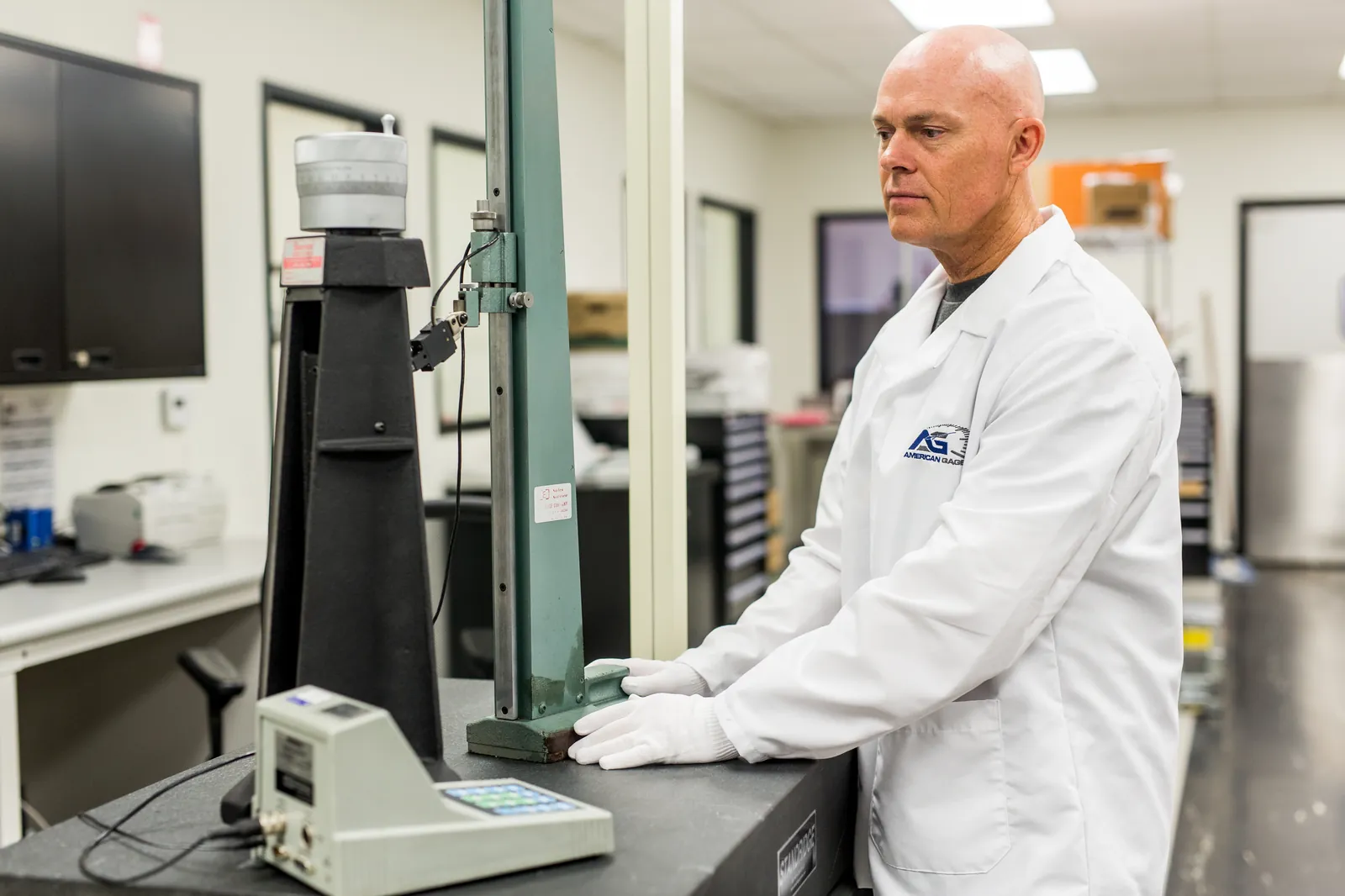
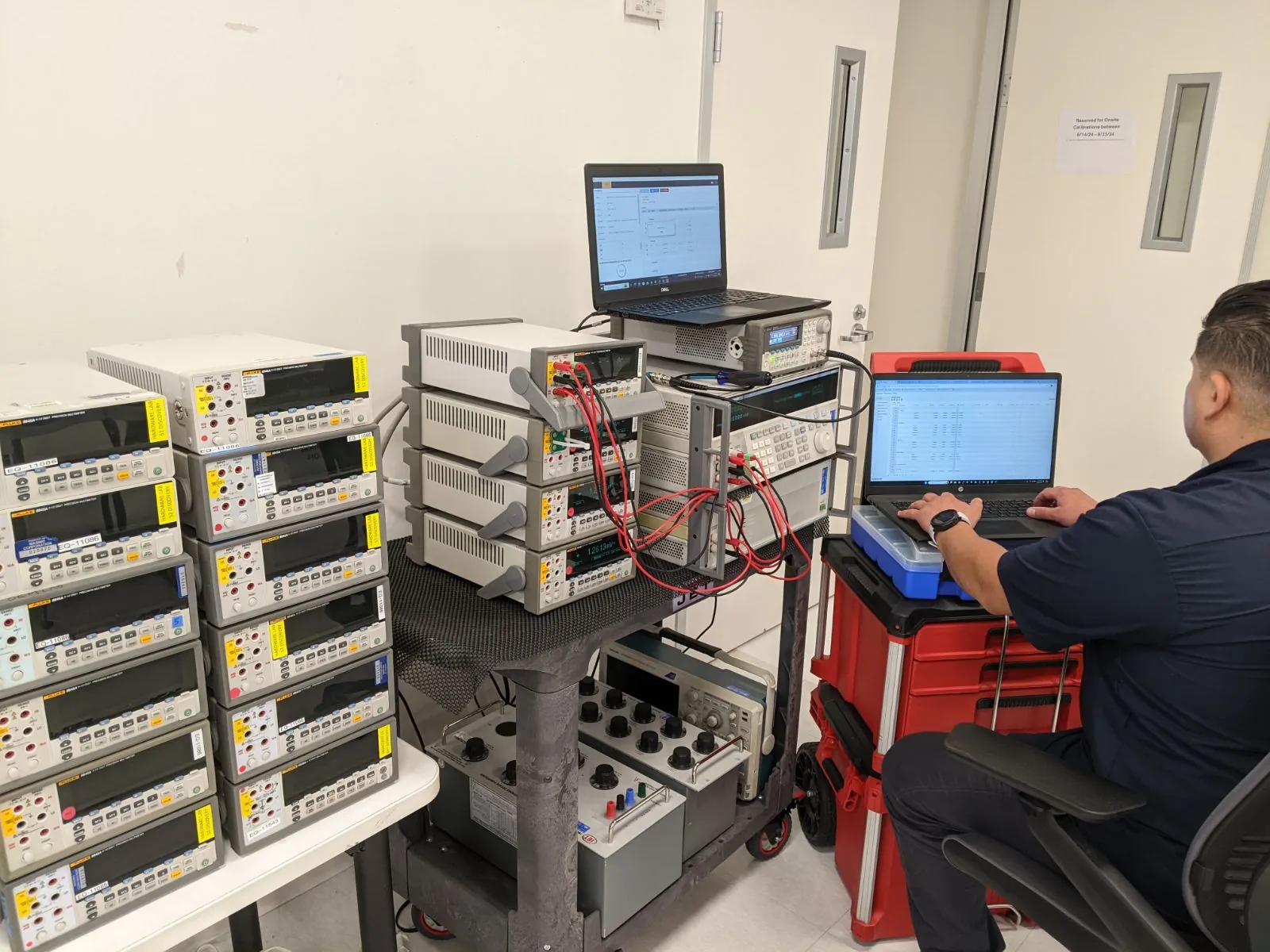
8,000 sq ft of discipline-specific, environmentally controlled laboratories in Placentia — accredited to ISO/IEC 17025:2017 by A2LA, certificate #4296.01. Nothing is forwarded to out-of-state labs.
Calibration capabilities available to Culver City companies
Culver City calibration FAQs
Do you pick up in Culver City?
Yes. Culver City is on our free Tuesday and Thursday Los Angeles County route. The lab is about 38 miles away in Placentia, typically 50 to 70 minutes depending on traffic.
Can you calibrate load cells used in rigging and motion systems?
Yes. We calibrate force by dead weight, covering load cells, dynamometers, and force gauges, with accredited certificates documenting as-found and as-left values.
We are a hardware startup with no calibration program. Where do we start?
Send us your instrument list. We will tell you what genuinely needs to be on a schedule, what interval each item warrants, and what your certificates need to carry for the qualification you are heading toward.
Can you calibrate at our facility instead?
Yes, for dimensional, mechanical, and electrical work. On-site visits are booked about two weeks ahead, and after-hours or weekend scheduling can be arranged around production.
Popular calibration services
- Pipette Calibration →
- Torque Wrench Calibration →
- Pressure Gauge Calibration →
- Caliper Calibration →
- Micrometer Calibration →
- Gage Block Calibration →
- Spectrum Analyzer Calibration →
- Network Analyzer Calibration →
- Signal Generator Calibration →
- Oscilloscope Calibration →
- On-Site RF Calibration →
- Torque Analyzer Calibration →
- Multimeter Calibration →
- Scale & Balance Calibration →
- Surface Plate Calibration & Resurfacing →
- Thread Gage Calibration →
- Force Gauge Calibration →
- Hardness Tester Calibration & Repair →
- Rush & Expedited Calibration →
- Mitutoyo Instrument Calibration →
- Starrett Instrument Calibration →
- Fluke Instrument Calibration →
Nearby service areas
Need calibration in Culver City?
Send your equipment list and we'll confirm scope, pricing, and turnaround within one to two business days — with free pickup on the Tuesday & Thursday route.