
Service Area · City
Calibration Services in Palm Springs
Palm Springs is not a manufacturing town. What it has instead is a 385-bed Level I trauma center with a 2030 seismic deadline, a city-owned airport that cleared 3.3 million passengers in 2025, a water agency running twenty-seven deep wells, twenty-nine airworthy warplanes in a 70,000-square-foot hangar complex, and a cylinder gas depot that fills by weight. That is a real instrument population, and it is about eighty-five miles east of us on the Friday route.

Distance
≈85 miles from our Placentia lab
Drive time
1 hr 35 min – 1 hr 50 min off-peak
Route days
Friday — free Inland Empire pickup & delivery
Two state highways, and the two that get wrongly credited
Palm Springs covers 94.55 square miles, which is an unusually large footprint for a city of about forty-five thousand people and the reason its territory reaches all the way north to the interstate. The I-10 traverses the northern limits of the city with four interchanges inside the city boundary: SR-111, Whitewater Canyon Road, Indian Canyon Drive and Gene Autry Trail. SR-111 runs the length of the city from the Cathedral City line north to the I-10, and through downtown it splits into a one-way couplet — northbound on Indian Canyon Drive, southbound on Palm Canyon Drive. North Palm Canyon Drive is a divided expressway from Tram Way to the I-10, the city’s only expressway segment, and SR-111 is part of the state truck route system. A barely signed SR-111 Business follows the original alignment down Palm Canyon Drive, which is why downtown Palm Canyon still feels like a highway that is not one.
Two routes get attached to Palm Springs constantly and neither enters it. SR-62, the Twentynine Palms Highway, begins at a freeway-to-freeway interchange with the I-10 in unincorporated Riverside County, outside the city limits — the city’s own circulation element lists it only as a route that connects to the I-10 and provides additional access. SR-74, the Palms to Pines Highway, meets SR-111 in Palm Desert roughly fourteen miles southeast, and Caltrans relinquished the Palm Desert portion in 2008. SR-86, SR-243, SR-371 and the I-15 are all somewhere else entirely. One more worth correcting: the San Gorgonio Pass wind farm, which everyone calls the Palm Springs wind farm, runs from the eastern slope of the pass near Cabazon out past Whitewater and is overwhelmingly in unincorporated county rather than in the city. The city has been lead agency for energy projects in its northern panhandle, but those turbines are not city facilities.
From the lab the drive is the 91 east through Corona to Riverside, the 60 east through Moreno Valley and the Badlands, the I-10 east at Beaumont through the San Gorgonio Pass, then SR-111 southeast into town — about eighty-five road miles and an hour thirty-five to an hour fifty off-peak. The 57 north to the 60 east skips the Corona bottleneck at the cost of about ten miles. The pass segment of the I-10 is genuinely windy and carries high-wind truck restrictions and occasional blowing-sand closures, which is worth knowing when you are scheduling a pickup. Inside the city the arterials follow a half-mile grid: Gene Autry Trail and Indian Canyon Drive north to south with their own interstate interchanges, Ramon Road as the main east-west industrial and service corridor, El Cielo Road as the airport-area office and medical spine, then Crossley, Farrell, Sunrise Way, Vista Chino, Alejo, Mesquite and Tahquitz Canyon Way. The genuine light-industrial pocket is Garnet Avenue, 19th Avenue and Ruppert Street off Indian Canyon near the I-10.
A Level I trauma center with a 2030 deadline
Desert Regional Medical Center at 1150 North Indian Canyon Drive is the heavyweight of the city’s instrument population. The state lists it at 385 licensed beds, and it became the Coachella Valley’s first and only verified Level I trauma center in April 2023. It is operated by Tenet Healthcare as part of the Desert Care Network under a lease from the public Desert Healthcare District dating to 1997, and that arrangement changed materially and recently: voters approved Measure AA in November 2024 and the lease-purchase agreement was signed that December, extending the lease from 2027 to 2057, with Tenet paying roughly $650 million over the term, ownership transferring at lease end, and Tenet contractually responsible for the hospital’s seismic compliance, which state law requires by 2030. A thirty-year commitment with a 2030 construction deadline attached is a sustained capital and instrumentation program, not a maintenance budget.
A trauma center at that scale runs essentially every discipline we hold. On the biomedical side: infusion pump flow and occlusion-pressure analyzers, defibrillator and electrosurgical analyzers, patient monitor and non-invasive blood pressure simulators, sphygmomanometers, ventilator and anesthesia gas flow analyzers, electrical safety analyzers, autoclave and sterilizer temperature and pressure verification with mapping, and medical-gas regulators, outlets and master and area alarm gauges under NFPA 99. In the clinical laboratory: single and multichannel pipettes, analytical and precision balances with certified weights, centrifuge tachometers and timers, and certified incubator, refrigerator, freezer and blood-bank thermometers and data loggers. In imaging: radiation survey meters and dosimetry under CDPH Radiologic Health Branch oversight. In the compounding pharmacy: balances, differential pressure gauges and particle counters under USP chapters 795, 797 and 800 and California Board of Pharmacy rules.
The hospital is not the only clinical instrument population in the city. Desert Oasis Healthcare Medical Group at 275 North El Cielo Road, Suite D402 holds a CLIA Certificate of Compliance for its laboratory. DAP Health runs a federally qualified health center at 1695 North Sunrise Way and a second site on North Palm Canyon Drive, and because an FQHC participates in the CDC Vaccines for Children program it is required to use certified, calibrated digital data loggers with a valid calibration certificate for vaccine storage — one of the few places in American healthcare where the calibration certificate itself is named in the rule. One correction worth making: Borrego Health no longer exists as a separate operator here; DAP Health acquired it out of bankruptcy and those clinics now run under the DAP name.
Twenty-nine flying warplanes, and a city airport setting records
The Palm Springs Air Museum at 745 North Gene Autry Trail is the most interesting calibration account in the city. It holds what it describes as one of the world’s largest collections of flying Second World War warplanes — twenty-nine vintage aircraft in a 70,000-square-foot facility with three display hangars and direct airport access for flight demonstrations, with others, including an F-102 and a Huey gunship, under restoration. The operative word is flying. An airworthy radial-engine aircraft is maintained to published torque values, and 14 CFR 43.13 acceptable practice expects the tools and test equipment used to be calibrated and traceable.
That makes the museum’s shop list a genuine measurement list rather than a museum list: calibrated torque wrenches across several ranges, micrometers, calipers, dial indicators and bore gauges for cylinder, bearing and control-surface work, cable tensiometers for flight control rigging, magneto timing lights, vacuum and pressure gauges, fuel-flow and compression testers, and aircraft weighing scales and load cells for weight and balance. These are also exactly the instruments that travel well, which matters eighty-five miles out.
Palm Springs International Airport at 3400 East Tahquitz Canyon Way is city-owned and had a record year in 2025, clearing 3.3 million passengers, up about 2.4 percent, with five all-time monthly records and roughly half a million passengers in March alone. Its capital program runs under the Progress PSP banner. A Part 139 certificated airport carries its own instrument population: fuel meters and fuel-quality test equipment, ground support and tug torque wrenches, tire and hydraulic pressure gauges, runway friction and lighting photometry, weather sensors, aircraft rescue and firefighting pressure gauges and flow meters, and multimeters and insulation testers for the airfield lighting circuits. And while we are naming it correctly — PSP is in Palm Springs, not in Palm Desert, an error that has made it into print.
Twenty-seven wells, a contract-operated plant, and a depot that fills by weight
Desert Water Agency at 1200 South Gene Autry Trail is both a State Water Project contractor and the city’s retail water utility, and it is the one to name — Coachella Valley Water District serves the east valley from Palm Desert, which is a frequent mix-up. The agency operates twenty-seven wells drilled a thousand to twelve hundred feet deep with pumps set as far as five hundred feet down, chlorinates to state requirements, co-operates the Whitewater and Mission Creek recharge ponds with CVWD, and takes roughly seventy-five percent of the city’s treated effluent to filter and disinfect for golf course and park irrigation. The city’s own wastewater treatment plant sits at 4375 East Mesquite Avenue, with daily operations run under contract by Veolia North America, and about a quarter of its effluent goes to percolation ponds for groundwater recharge.
Between them that is a long instrument list on a short route. Well flow meters and totalizers, pressure transducers and gauges, level transmitters, chlorine residual analyzers, turbidimeters, and pH, ORP and conductivity probes on the potable side; dissolved oxygen probes and influent and effluent flow metering at the treatment plant; laboratory balances, pipettes and reference thermometers behind the compliance analyses; and backflow prevention test gauge kits needing annual certification under Title 17 and AWWA cross-connection control. The regulators are California Code of Regulations Title 22 with State Water Board Division of Drinking Water permitting and ELAP accreditation on the drinking water side, and the Colorado River Basin Regional Water Quality Control Board, Region 7, on the discharge side.
WestAir Gases & Equipment at 3591 North Indian Canyon Drive is the other address in the city where measurement is the regulated activity rather than a quality nicety. It distributes industrial, medical and specialty gases and refills nitrogen, carbon dioxide and propane cylinders. Two things follow from that. Cylinder requalification and retest fall under DOT and PHMSA rules at 49 CFR Parts 173, 178 and 180, which means hydrostatic test pressure gauges and transducers whose accuracy is the whole basis of the retest record, plus NFPA 58 for propane. And because carbon dioxide and propane are filled by weight rather than by volume, platform scale accuracy is the legal control on the fill — along with regulator and manifold gauges, leak detectors and fill-temperature thermometers. Medical oxygen is a drug, so filling and labeling it is drug manufacturing under FDA cGMP at 21 CFR Parts 210 and 211.
What Palm Springs is, and what we will not claim
The honest description is a tourism, hospitality, healthcare and institutional economy. More than a hundred and thirty hotels and resorts operate here and municipal finance leans on retail sales tax and the transient occupancy tax. The ten largest employers are a school district, a hospital, a casino, the city, a big-box retailer, a resort, two home-improvement chains and two hotels — not one manufacturer among them. That resort base is its own instrument population and a steady one: boiler and pressure-vessel gauges with safety-valve set-pressure verification, pool and spa pH and ORP controllers under Riverside County environmental health and Title 22 public pool rules, commercial kitchen thermometers and dishmachine gauges, chiller and HVAC instrumentation, and receiving scales. Palm Springs Unified School District at 150 District Center Drive enrolled 19,621 students in 2025–26 and runs buses, a central food service and science labs. The City of Palm Springs carries 667.5 allocated full-time positions as of its December 2025 compensation plan, which is a current figure rather than a stale one.
Several things here need naming correctly rather than approximately. The Agua Caliente Band of Cahuilla Indians owns roughly 6,700 acres inside the city limits and is its largest landowner; land ownership across Palm Springs is a checkerboard of fee and trust parcels, which affects permitting and who you contract with. Its downtown property is Agua Caliente Casino Palm Springs at 401 East Amado Road — renamed from Spa Resort Casino in 2019 — operating under the tribe’s Class III compact with the state and National Indian Gaming Commission oversight. The Palm Springs Aerial Tramway at One Tram Way is a regulated passenger ropeway under the Cal/OSHA Elevator, Ride and Tramway Unit, which puts haul-rope tension and load measurement, brake torque verification, non-destructive testing on rope and grips, tachometers and hydraulic pressure gauges on a mandated schedule. College of the Desert’s Palm Springs campus is a twenty-nine-acre site under construction at North Farrell Drive and East Tahquitz Canyon Way, with interior work underway and a Fall 2027 target — it is coming, not open. The Desert Peak Energy Center, a 700 MW battery storage project in the city’s northern panhandle with a gen-tie to the SCE Devers substation, is approved and under development rather than operating.
What we will not claim is straightforward. There is no aerospace manufacturing, no medical-device manufacturing and no automotive tier supply inside Palm Springs, so we claim no AS9100, Nadcap, ISO 13485, 21 CFR 820 or IATF 16949 work here — those standards are real elsewhere in our service area and they are not real in this city. The industrial district on Garnet Avenue, 19th Avenue and Ruppert Street is modest and it straddles a jurisdiction line: addresses there carry Palm Springs 92262 while McLane Street carries North Palm Springs 92258, which is unincorporated county. E&S Precision Sheetmetal, the best precision-metal shop in the area, is at 19298 McLane Street in North Palm Springs — just outside the city, and we would rather say so than borrow it. Eisenhower Health is in Rancho Mirage and SunLine Transit is headquartered in Thousand Palms. What genuinely applies here is CLIA and California Title 22 with CDPH licensing, CMS conditions of participation and Joint Commission accreditation, the Health and Safety Code seismic requirements driving the 2030 deadline, NFPA 99 and Cal/OSHA pressure-vessel permits, USP 795, 797 and 800 with Board of Pharmacy oversight, CDPH Radiologic Health Branch for imaging, HRSA and CDC Vaccines for Children storage rules at the FQHC, 14 CFR Part 139 at the airport and 14 CFR Part 43 practice on the flying collection, DOT and PHMSA cylinder requalification with NFPA 58, Title 22 drinking water rules with Region 7 discharge requirements, South Coast AQMD including Rule 403.1 for Coachella Valley fugitive dust sources, Riverside County weights and measures device registration, TTB Part 25 and California ABC at the local brewery, Cal/OSHA throughout, and NIST traceability under all of it. The lab is about eighty-five miles west on the free Friday Inland Empire pickup and delivery route, with expedited 24, 48 and 72-hour service and on-site calibration for equipment that should not be moved. All nine disciplines run under one roof: dimensional, electrical and RF, temperature and humidity, pressure, mass, pipettes, force and torque, gas flow and vibration. American Gage has calibrated from inside Orange County since 1968, under current ownership since 1998, with more than a million calibrations performed in an 8,000 sq ft facility. Every certificate carries as-found and as-left data, measurement uncertainty, NIST traceability and the ANSI/NCSL Z540.3 decision rule with TUR, under ISO/IEC 17025:2017 accreditation from A2LA, certificate 4296.01. Standard turnaround is 7–10 business days.
Industries we serve in Palm Springs
- Hospitals & Clinical Labs
- Aviation & Airport Operations
- Water & Wastewater
- Hospitality & Resorts
- Industrial Gas & Energy
The Lab Behind the Routes
Where Palm Springs instruments actually get calibrated.
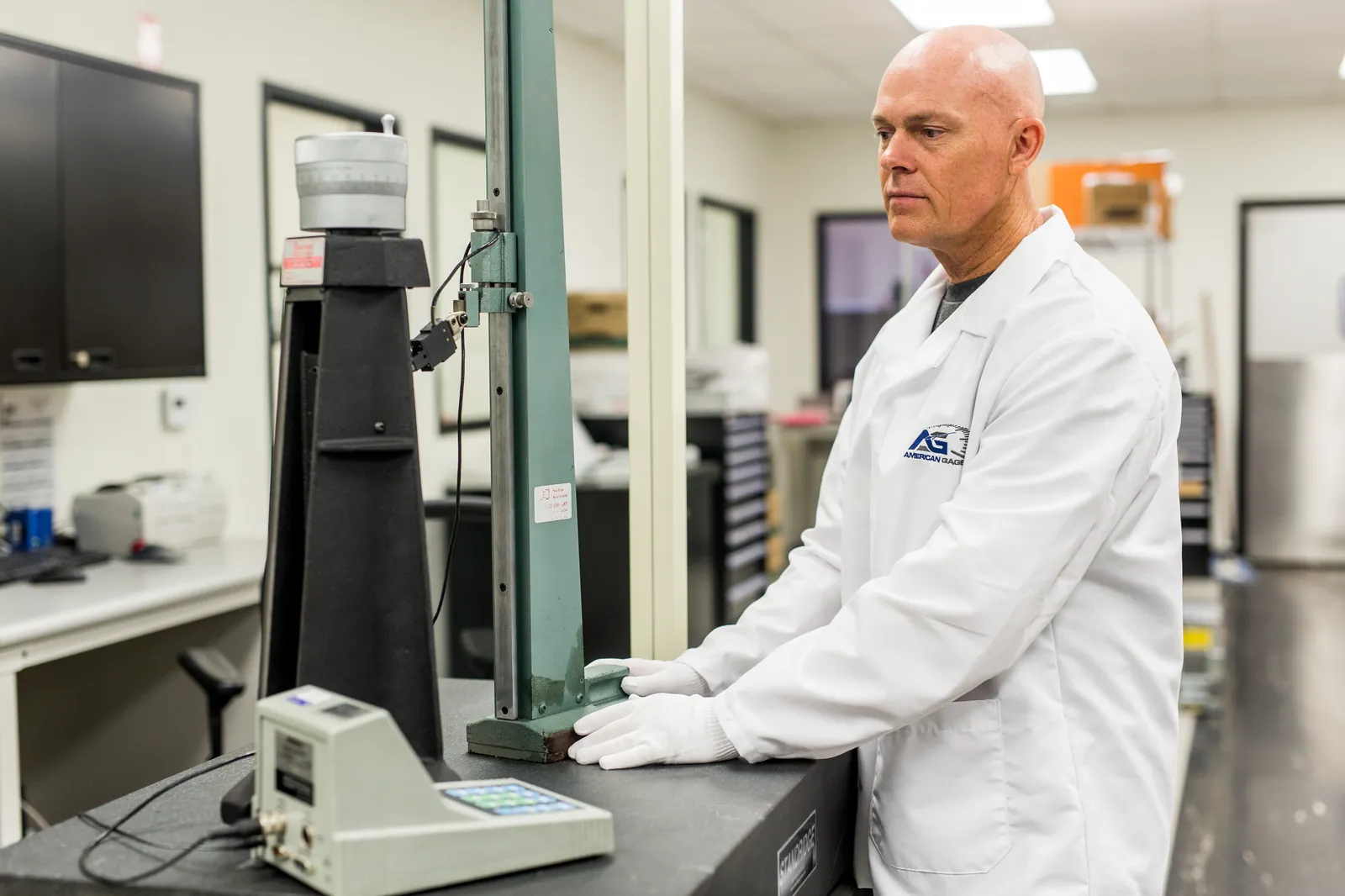
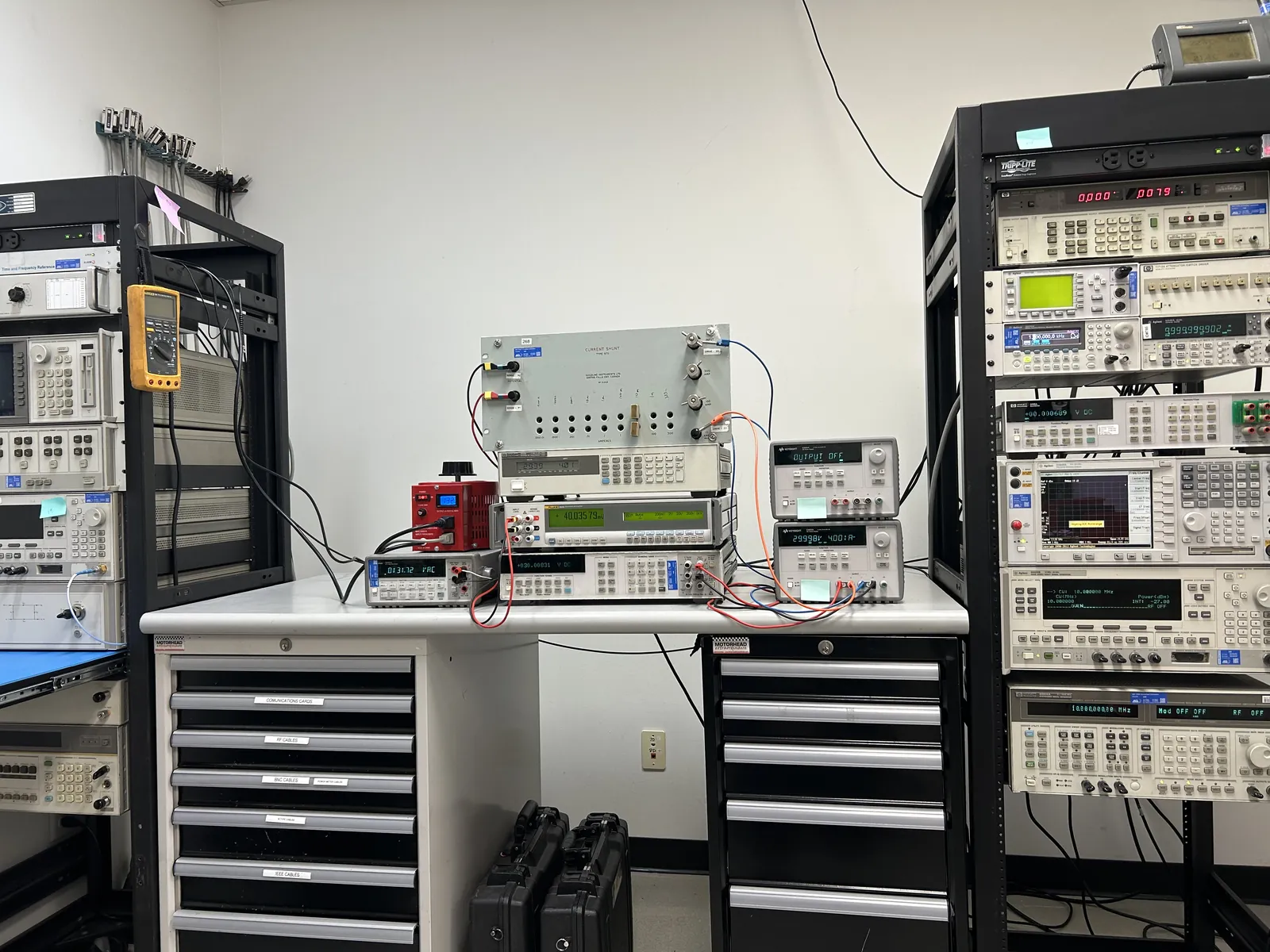
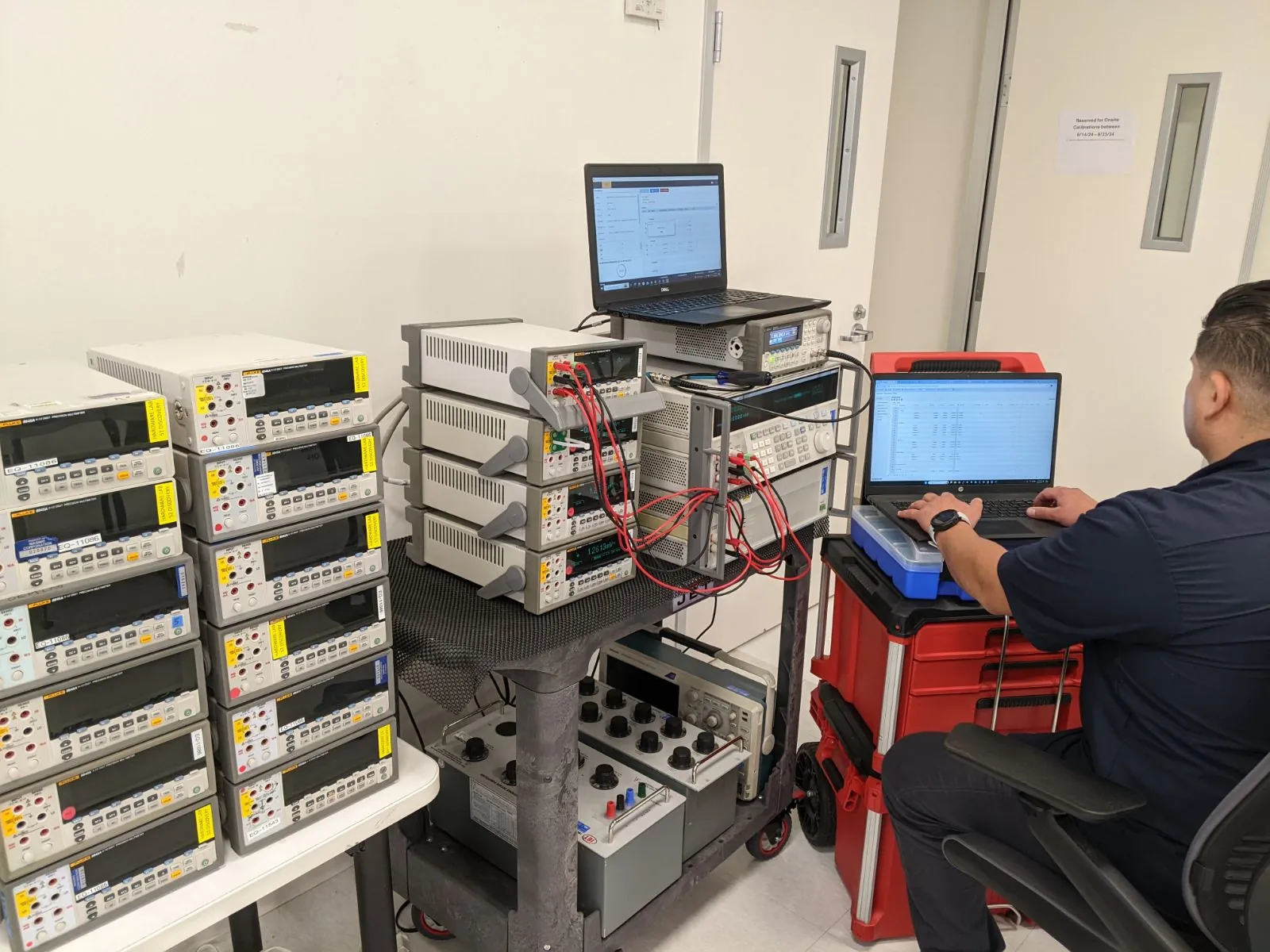
8,000 sq ft of discipline-specific, environmentally controlled laboratories in Placentia — accredited to ISO/IEC 17025:2017 by A2LA, certificate #4296.01. Nothing is forwarded to out-of-state labs.
Calibration capabilities available to Palm Springs companies
Palm Springs calibration FAQs
How far is your lab from Palm Springs?
About eighty-five road miles, roughly an hour thirty-five to an hour fifty off-peak — the 91 east to Riverside, the 60 east through the Badlands, the I-10 east through the San Gorgonio Pass, then SR-111 into town. Palm Springs is in Riverside County, so it is on our free Friday Inland Empire pickup and delivery route. The pass stretch of the I-10 carries high-wind truck restrictions, which occasionally shifts a pickup window.
Do you handle hospital biomedical and clinical laboratory calibration?
Yes. Infusion pump and defibrillator analyzers, patient monitor and NIBP simulators, sphygmomanometers, ventilator and gas flow analyzers, electrical safety analyzers, autoclave temperature and pressure verification with mapping, and medical-gas regulators and alarm gauges under NFPA 99. On the laboratory side, pipettes, analytical balances with certified weights, centrifuge tachometers, and certified refrigerator, freezer, incubator and blood-bank thermometers and data loggers for CLIA and Title 22.
Can you calibrate torque wrenches and test gear for airworthy vintage aircraft?
Yes, and it is a discipline we run every week. Torque wrenches across several ranges with as-found and as-left data, micrometers, calipers, dial indicators and bore gauges, cable tensiometers, vacuum and pressure gauges, and aircraft weighing scales and load cells for weight and balance. 14 CFR 43.13 acceptable practice expects traceable tooling, and every certificate we issue carries NIST traceability and measurement uncertainty.
We refill CO2 and propane cylinders. What does that actually require?
Two things, and they are separate. Cylinder requalification under DOT and PHMSA rules at 49 CFR Parts 173, 178 and 180 depends on the accuracy of your hydrostatic test gauges and transducers, because that reading is the retest record. And because CO2 and propane are filled by weight rather than volume, your platform scales are the legal control on the fill. We calibrate both, plus regulator and manifold gauges, leak detectors and fill-temperature thermometers.
Popular calibration services
- Pipette Calibration →
- Torque Wrench Calibration →
- Pressure Gauge Calibration →
- Caliper Calibration →
- Micrometer Calibration →
- Gage Block Calibration →
- Spectrum Analyzer Calibration →
- Network Analyzer Calibration →
- Signal Generator Calibration →
- Oscilloscope Calibration →
- On-Site RF Calibration →
- Torque Analyzer Calibration →
- Multimeter Calibration →
- Scale & Balance Calibration →
- Surface Plate Calibration & Resurfacing →
- Thread Gage Calibration →
- Force Gauge Calibration →
- Hardness Tester Calibration & Repair →
- Rush & Expedited Calibration →
- Mitutoyo Instrument Calibration →
- Starrett Instrument Calibration →
- Fluke Instrument Calibration →
Nearby service areas
Need calibration in Palm Springs?
Send your equipment list and we'll confirm scope, pricing, and turnaround within one to two business days — with free pickup on the Friday route.